
Remote training has become normal. It is convenient, scalable, and often cheaper than the alternative. For individuals learning at their own pace, remote courses work well.
For teams trying to build shared BIM capability, the picture is different.
Practices that have tried both formats consistently find that on-site, in-person training produces better outcomes when the goal is to align a team around common workflows and standards. The reasons are practical rather than ideological, and they matter for any practice deciding how to invest in training.
Team training is fundamentally different from individual learning
When a single architect signs up for a Revit course, they are working on their own development. They go through the material, complete the exercises, and apply what they have learned at their own pace.
When a team of four learns together, the dynamic changes completely. The goal is not just that each person becomes more capable individually, the goal is that the team develops a shared way of working. Shared expectations about file structure. Shared assumptions about what a model should contain. Shared language for talking about coordination.
This kind of alignment is hard to build remotely. People drop in and out of video calls. Side conversations do not happen. The shared vocabulary that emerges naturally when a group works through a problem together does not develop the same way over Microsoft Teams.
Removing people from their desks creates focus
On-site training does not mean training that is comfortable. It means training that is dedicated.
When a team logs into a remote training session, they are still at their desks. Email is open. Teams notifications are pinging. A colleague walks past and asks a quick question about a current project. The session continues, but attention is fragmented across whatever else is happening that day.
On-site training that takes place in a meeting room with phones away, laptops focused on the training files, and no easy access to the day’s emergencies produces dramatically different outcomes. People learn faster because they are actually paying attention.
This is not a soft argument. The cognitive cost of context switching is well documented. A team that is half-attending a remote session over three days might cover the same material as a team that is fully focused for three days, but the depth of understanding is not comparable.
Real-time problem solving with the actual files
Most practical BIM challenges are not about software features, they are about the messy details of how a specific project is set up. The office template. The way the practice names views. The peculiarities of the model that has evolved over multiple iterations.
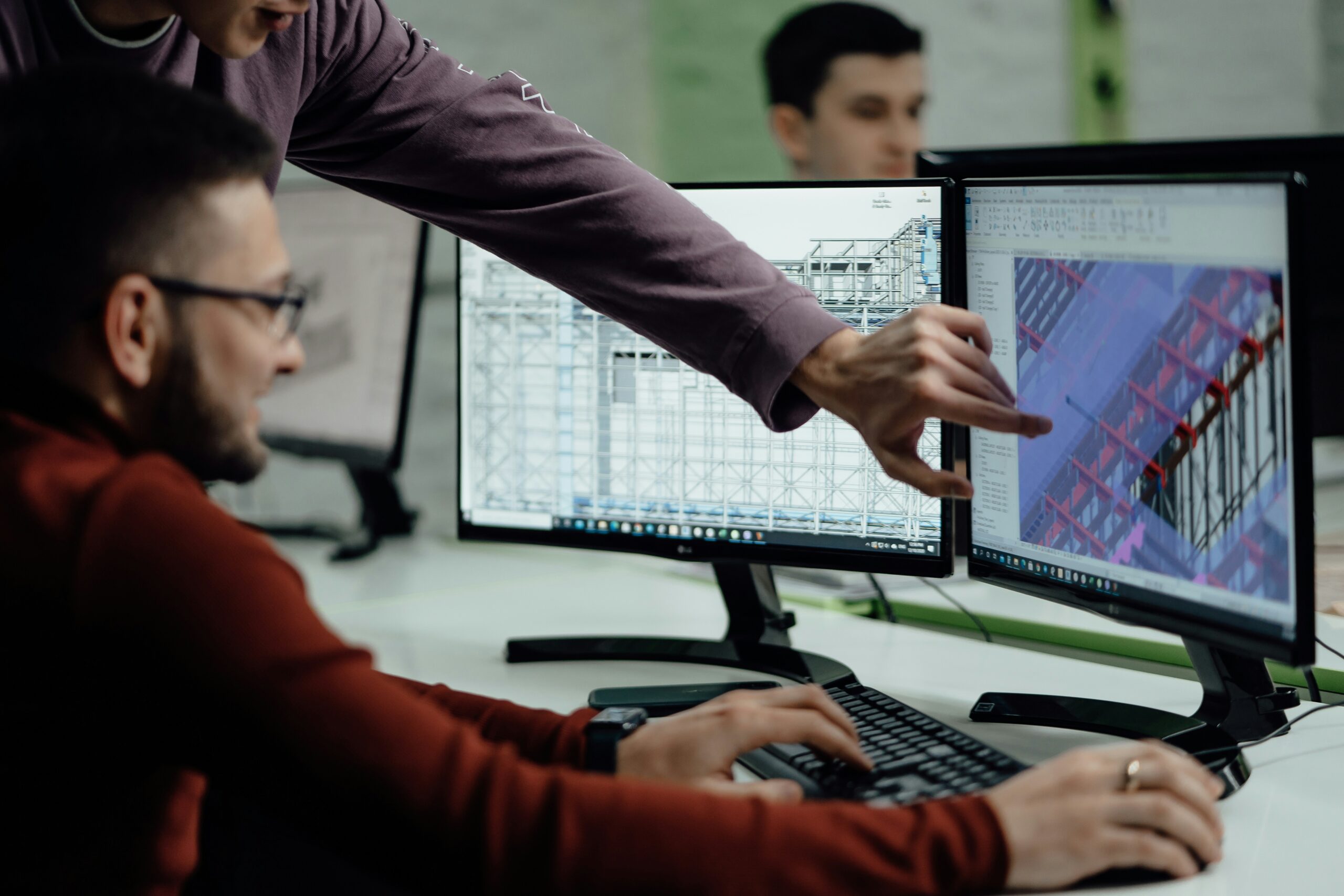
On-site training allows for these specifics to be addressed directly. A trainer can sit alongside a team member, look at their actual project file, and work through a real coordination issue in real time. This kind of practical problem-solving is hard to replicate remotely, where screen-sharing introduces latency, file access becomes complicated, and the trainer cannot easily switch between team members.
The result is training that translates directly to the team’s day-to-day work, rather than abstract exercises that participants have to translate themselves once they return to their projects.
Side conversations are where shared standards form
Some of the most valuable moments in team training do not happen during the structured content. They happen during the breaks. Someone mentions a problem they hit on a recent project. The trainer offers a perspective. Two team members realise they have been doing the same thing in different ways and agree on a shared approach.
These conversations build the practical, working consensus that distinguishes a coordinated team from a group of individuals who happen to use the same software. Remote training has no equivalent. The mute button comes off, the trainer presents the next slide, and these informal but crucial exchanges never happen.
When remote training does work
None of this is an argument against remote training in principle. For specific use cases, remote delivery works well.
If a team is geographically distributed and cannot reasonably gather in one place, remote delivery is the realistic option. If the goal is a single short session covering a specific feature such as a quick refresher on view templates, for example — remote delivery is efficient. If individuals are pursuing self-directed learning, on-demand video courses are excellent.
But for the specific task of bringing a team up to a shared standard on a complete BIM workflow, on-site delivery produces meaningfully better outcomes. The investment in getting people in the same room, focused on the same material, working through the same problems together, repays itself in the alignment that emerges by the end of the programme.
The decision is about outcomes, not preferences
Practices choosing between on-site and remote training should not start with what feels easier to organise. They should start with what they actually need the training to achieve.
If the goal is to give individuals general capability, remote works. If the goal is to build a team that delivers projects to consistent standards, on-site delivery is worth the additional investment.
The cost difference between formats is real but not dramatic and it is dwarfed by the difference in what the training actually delivers.
Arch-Aid delivers in-house BIM and Revit training programmes at your office. Three days, small group sizes, complete project from setup to documentation. Visit arch-aid.com/corporate to learn more.